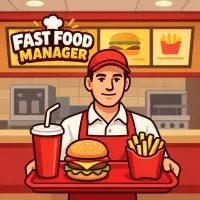
A cramped coffee shop wedged between two busy buildings is the setting for Coffee Break. Small street corner that increases with earnings and demand.

A Busy Little Shop
The new owner has enough money to acquire an espresso machine and a service counter. Five successive growth phases unfold, each bringing greater revenue and grander plans than the original setup. Tables and chairs are added so customers can sit and enjoy their hot drinks. Rising revenue allows the menu to expand beyond coffee, eventually leading to curbside service for cars. Finally, standalone fast-food outlets—such as burger or pizza shops—are introduced. Shuttles, hoverboards, and even office chairs become available to help navigate the business area.
Beginnings are tough; finances barely cover basic equipment and a few tables and chairs. As crowds swell, temporary speed boosts appear like lifelines, offering a short-term increase in movement speed or carrying capacity. You must decide exactly when to use them to avoid becoming overwhelmed. Curbside window service yields higher tips if executed quickly and accurately. Customers who sit down, receive a hot cup, and paying establishes the rhythm of a city establishment trying to survive. Those who know how to balance long-term investments with short-term boosts will ensure their shop doesn't stall in its infancy. Conversely, those who simply hoard cash without expanding seating will soon see customers waiting on their feet—only to walk away.
From A Street-Corner Café To A Diverse Chain Of Service Stops
- Using early capital to purchase equipment and furniture rather than hoarding cash
- Triggering a temporary boost during surges in customer traffic
- Hiring staff for cleaning and delivery when the workload exceeds personal capacity
- Expanding into automotive services and fast-food outlets once a solid foundation is established
Stores Worth Your Investment