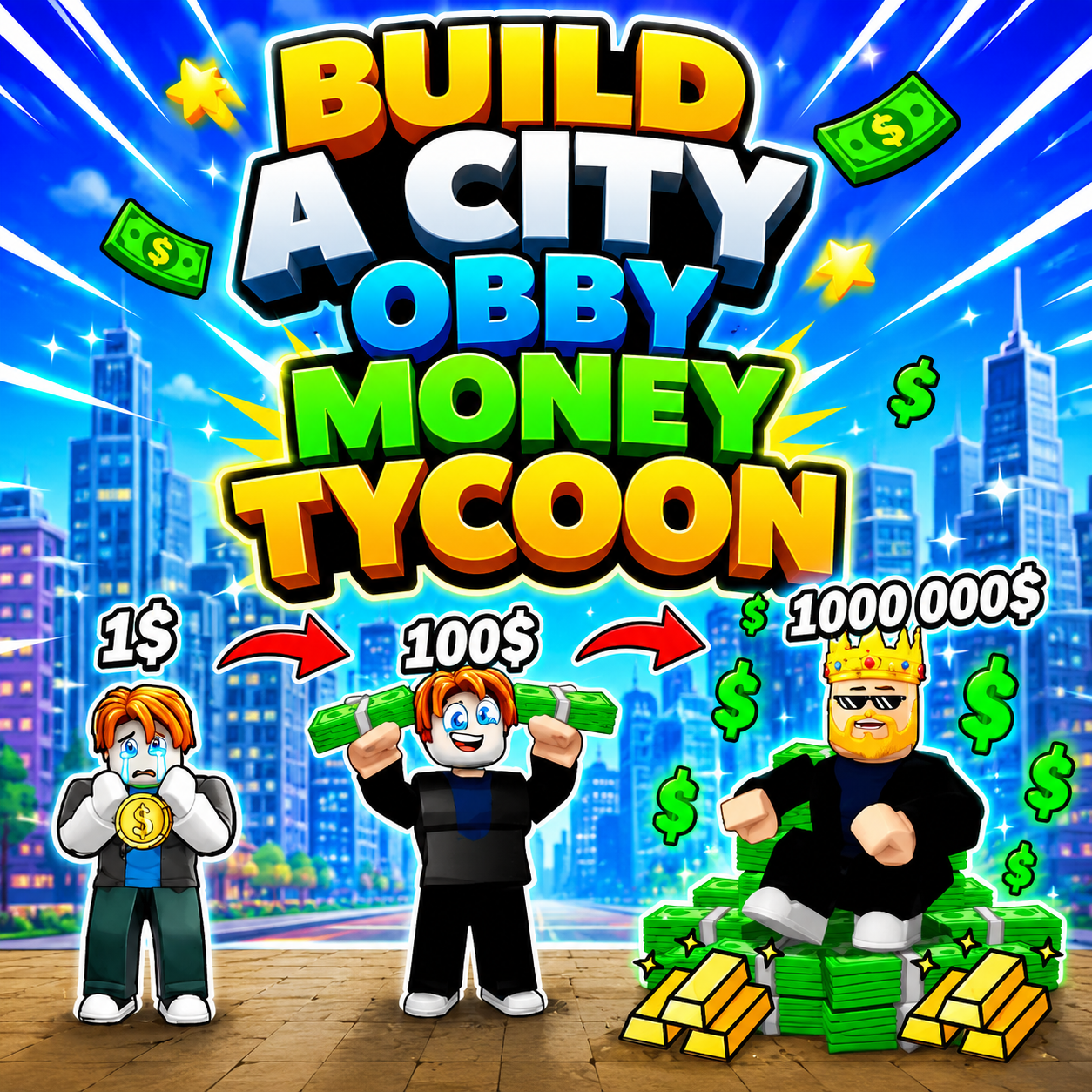
You build a booming city in Build a City Obby Money Tycoon from a bleak patch of ground. The bedrock of the future's city is laid with each brick you lay today.
The City Development Sense
The game combines elements of gentle obstacle courses with the complexity of tycoon management. Starting with a few small ATMs, you gradually build banks, houses, roads, and schools as your income increases. The population grows exponentially; the more services, the more vibrant and profitable the city becomes. The game's design makes players feel the real world's progress, from small revenues to large investment chains. Every decision to build more buildings or upgrade has consequences for cash flow and development speed.
The Atm System And The City Economy
ATMs are the economy's heart; they create cash and dictate early construction pace. Enhancements to each ATM allow for larger withdrawals per transaction while decreasing the need for human intervention. The strategy of maxing out all ATMs first is popular because the stable revenue helps fund larger projects later. As the number of ATMs and income increase, you need to allocate capital intelligently between upgrades and infrastructure expansion. Passive income combined with lucky wheel rewards creates diversified revenue streams, reducing financial risk. The labor system also plays a crucial role—allocating workers efficiently maximizes revenue per turn. Construction costs typically increase with level, so planning ahead and maintaining a buffer are essential. Understanding the yield mechanism between income and upgrades will lead you to a sustainable cash flow. A balanced economy of income, expenses, and investment allows your city to expand steadily and faster than your competitors imagine.
Basic Gameplay Guide
Gameplay starts simply; you buy ATMs, assign workers to collect money, and upgrade each machine to increase revenue each time. You move to construction markers to expand the bank, build houses, pave roads, and construct schools for residents. The left-hand side of the screen contains auxiliary upgrades such as increased movement speed, a lucky wheel, and daily rewards. The initial strategy is usually to maximize ATM revenue first, as it's the source of capital for all subsequent constructions. Once capital is stable, you invest in infrastructure to attract residents, and new residents stimulate demand for services and taxes. The Wheel of Fortune and time-based rewards are additional revenue sources; use them wisely to break through in the mid-game. Each construction milestone usually unlocks new interactions: residents need services, workers need to be hired, and roads need upgrades. Gameplay is easy to access: move, tap to buy, access markers to build, and track the progress bar. The gameplay is both simple for beginners and has layers of depth for challenging business players. Understanding the income-invest-expansion cycle is key to progressing quickly in Build a City Obby Money Tycoon.
Develop Your Own City